
Ceiling Fan Installation: Can Your Ceiling Box Hold It?
Most light-fixture boxes aren't built to hold a spinning fan. Here's how to check yours, what a proper fan brace costs, and how to choose the right fan for a Valley room.
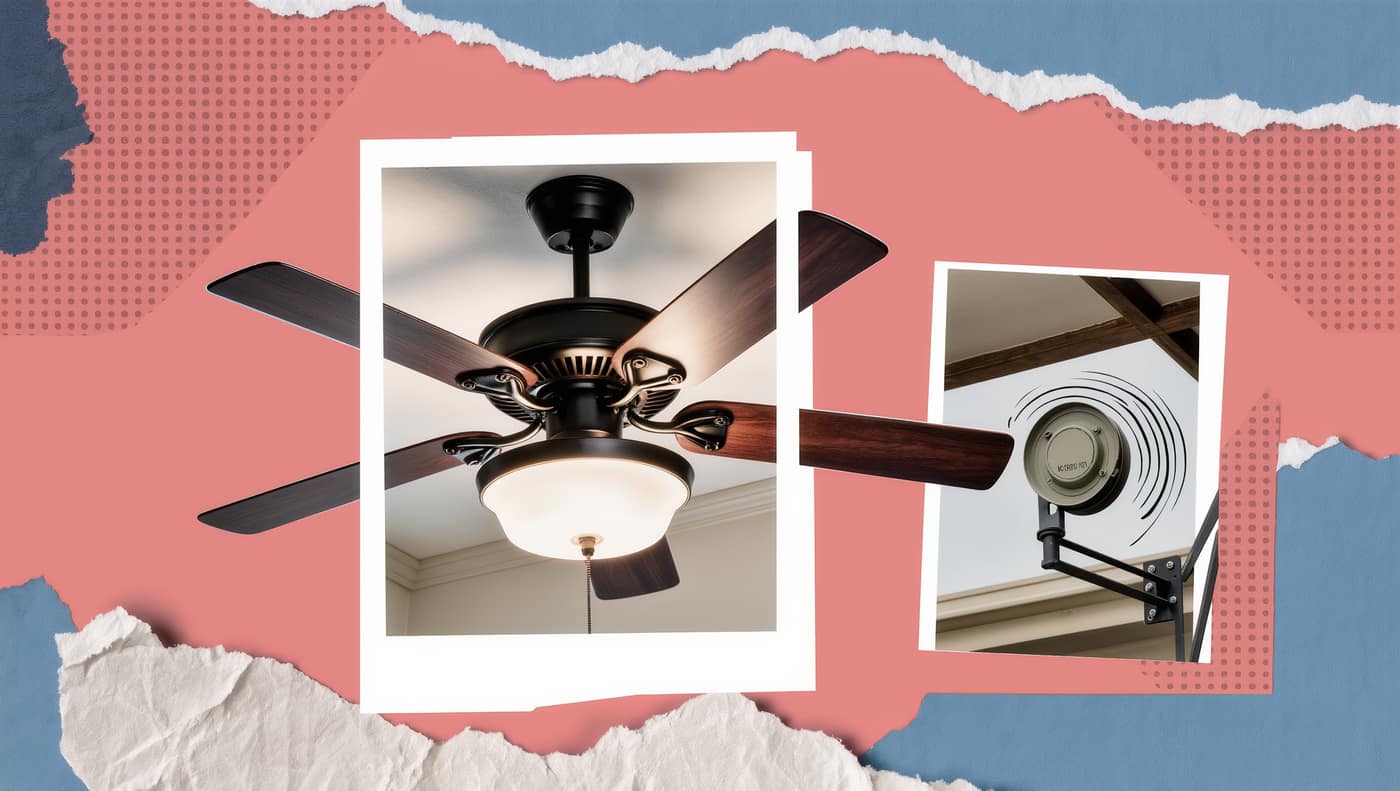
Maybe not. A standard light-fixture box is built to hold a still weight. A ceiling fan is heavier, and it spins, wobbles, and pulls on its mount every day. Only boxes listed and marked for fan support should hold a fan. Many older Valley homes, and plenty of newer ones, have light boxes where people want fans.
The fix is simple and affordable: a fan-rated box and brace, installed from below in most cases. Here's how to check yours and what to expect on cost.
How to Tell if Your Box Is Fan-Rated
With the power off at the breaker, remove the existing fixture's canopy and look inside the box.
A fan-rated box is marked inside with wording like "Acceptable for fan support" and a weight limit. It's usually up to 35 pounds, or up to 70 pounds for heavier boxes.
It's secured directly to a ceiling joist with screws or mounted on a metal brace that spans between joists.
Warning signs: a thin plastic box, a shallow "pancake" box with no markings, a box held only by drywall clips, or one that moves when you push on it. None of those should hold a fan.
Not comfortable checking? An electrician can confirm it in a few minutes during the install visit.
What Ceiling Fan Installation Costs
Replacing a fan on an existing fan-rated box: about $150 to $300 in labor.
Replacing a light with a fan, including a new fan-rated box and brace: about $250 to $450.
New fan location with new wiring and a wall switch: about $350 to $800. That depends on attic access and the distance to a power source.
High ceilings, vaulted great rooms, and outdoor patios: add for the lift or scaffolding, plus damp- or wet-rated fans outdoors.
Separate fan and light control, remotes, or smart switches: typically a modest add-on. These are planning ranges. You'll get a written price before work starts.
Choosing the Right Fan for the Room
Blade span: 42 to 48 inches for rooms up to about 144 square feet, 52 inches for rooms up to about 225 square feet, and 56 to 60 inches or more for great rooms and open layouts.
Height: blades should sit about 8 to 9 feet above the floor. On ceilings higher than 9 feet, use a downrod to bring the fan down where it moves air you can feel. On low ceilings, a flush or "hugger" mount keeps the clearance safe.
Outdoor patios: choose a damp-rated fan for covered patios and a wet-rated fan anywhere rain can reach it. Monsoon storms blow water sideways.
Motor: DC motor fans use far less energy than older AC motors, run quieter, and often come with remotes and more speed settings.
Why Fans Pay Off in Phoenix
A ceiling fan doesn't cool the air. It moves air across your skin, which makes a room feel several degrees cooler. That lets you set the thermostat a couple of degrees higher in summer without noticing, and with AC running most of the year, that adds up on your bill.
Set the blades to spin counterclockwise when you look up at them in summer, so they push air down. Turn fans off in empty rooms, because they cool people, not spaces.
Wiring and Controls
Many older rooms have a single switch and a single cable to the ceiling, which means the fan and light turn on together. A second cable lets you put the fan and light on separate switches. Remote kits and smart fan controls can also split them without new wiring.
If the fan is replacing a light that never had a switch, or you want a fan where there's no box at all, we run a new cable from a nearby circuit and add a wall switch. In most single-story Valley homes with attic access, that's quick work with no drywall damage.
Why Fans Wobble
Most wobble comes from one of three things: a box that isn't fan-rated or isn't secured tightly, blades that are out of balance, or loose blade-arm screws. A wobbling fan on a weak box is more than annoying. Over time, it can loosen the mount. A proper brace and a balance kit usually fix it for good.
Ceiling Fan Installation Across the Valley
We install and replace fans throughout metro Phoenix with our ceiling fan installation service, including ceiling fan installation in Sun City, Mesa, and Phoenix. Every fan goes on rated support, balanced, and wired to the control you want.
Frequently Asked Questions
Can I hang a fan from an existing light box?
Only if the box is marked as acceptable for fan support and is firmly attached to the framing. Otherwise, replace it with a fan-rated box and brace first.
Do I need attic access to install a fan brace?
No. Retrofit fan braces install through the existing ceiling hole and expand to lock between the joists, so most installs need no attic access or drywall repair.
Can a fan go on a vaulted or sloped ceiling?
Yes, with the right hardware. Most fans include a ball-and-socket mount that works on moderate slopes. Steeper ceilings need an angled mounting kit and a longer downrod so the blades clear the ceiling.
How heavy can a ceiling fan be?
Fan-rated boxes are typically marked for up to 35 or 70 pounds. Fans heavier than 70 pounds need support that's independent of the box, attached directly to the structure.
The Takeaway
If your box isn't marked for fan support and tied to the framing, don't hang a fan on it. A fan-rated brace is a small add-on that makes the fan quiet, steady, and safe for years.
Need a hand with this?
Ceiling Fan Installation
Keep Reading
How Much Does a Whole-Home Generator Cost in Phoenix?
Most Valley homeowners spend $9,000 to $18,000 for an installed standby generator. Here's what moves the number, and how to get AC-level backup without overbuying.
Read more
Breaker Keeps Tripping and Won't Reset? What It Means and What to Do Tonight
A breaker that trips the instant you reset it is telling you something specific. Here's how to read it, what you can safely try, and when to stop and call.
Read more
Electrical Panel Upgrade Cost in Phoenix: 100A vs. 200A (2026)
A same-size panel swap runs about $2,000–$4,000. Moving from 100 to 200 amps is usually $3,500–$6,500. Here's what you're paying for and how to tell which you need.
Read moreReady When You Are
Free estimates, upfront pricing, and licensed electricians who show up on time. Let's get it handled.