
Recessed Lighting Installation: Cost, Layout, and Mistakes to Avoid
Retrofit recessed lights usually run $150–$350 each in the Phoenix area. Where you put them matters as much as what you pay. Here's how to get both right.
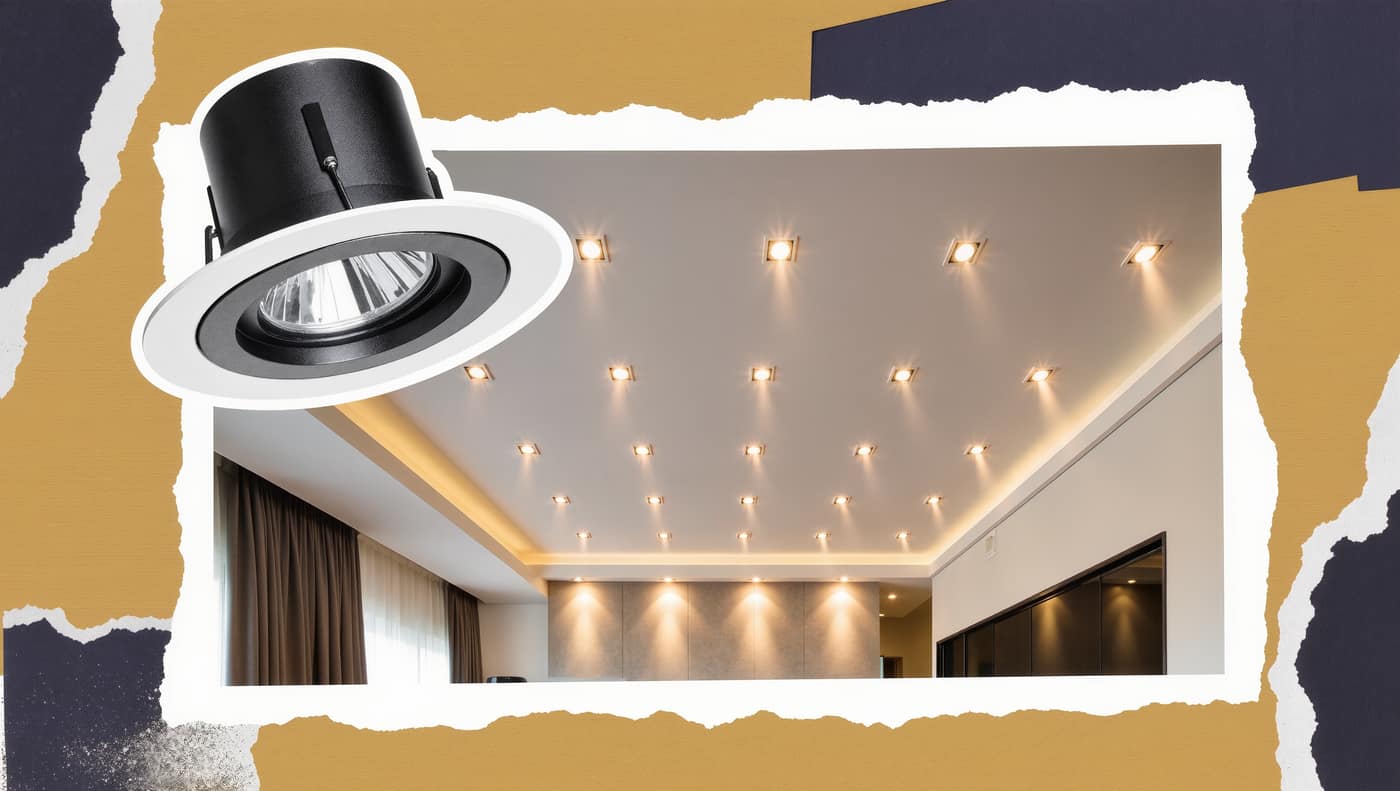
In the Phoenix area, retrofit recessed lighting typically costs $150 to $350 per light when several go in at once. A six-light living room usually lands between $900 and $2,100. The cost per light drops as the count goes up, because the circuit work, setup, and cleanup are shared.
Price is only half of the decision. A poorly planned layout looks like an airport runway on your ceiling, and the wrong fixture can fail early in a 140-degree Valley attic. Here's what to plan for before anyone cuts a hole.
What Recessed Lighting Costs
Retrofit lights in an existing ceiling with good attic access: about $150 to $350 each. That includes cutting in the fixture, wiring it, and connecting it to a switch or dimmer.
New circuit needed: add roughly $250 to $600 if the existing circuit can't carry the load or doesn't reach the room.
Hard access: single-story homes with open attics come in at the low end. Two-story homes, flat roofs, and vaulted ceilings with no attic above cost more, because the wiring has to be fished through finished spaces.
Dimmers and smart controls: a quality LED-compatible dimmer usually adds $75 to $200 installed. Smart dimmers and scene controls cost more but let you set the mood from your phone.
These are planning ranges. A short walkthrough gives you a written flat-rate price. Combining several rooms in one visit usually lowers the cost per light.
Layout Rules That Actually Work
Spacing: a simple starting point is to space lights about half the ceiling height apart. On an 8-foot ceiling, that's roughly 4 feet between lights. On a 10-foot ceiling, about 5 feet.
Distance from walls: keep lights about 2 to 3 feet from the walls. Too close and you get harsh scallops of light on the wall. Too far and the edges of the room fall into shadow.
Light the tasks, not the ceiling. In kitchens, put lights over the front edge of the counters so you're not working in your own shadow. In living rooms, wash the walls and art, and let lamps and pendants handle the rest.
Layer it. Recessed lights are ambient light. Pair them with pendants over islands, under-cabinet strips, and accent lighting for a room that looks finished instead of flat.
Size: 4-inch fixtures give a cleaner, modern look and work well in kitchens and hallways. 6-inch fixtures throw more light and suit larger rooms and higher ceilings.
Choosing the Right Fixture for a Phoenix Attic
Valley attics regularly top 140 degrees in summer, and heat is what kills LED drivers. Choose fixtures that are IC-rated, meaning safe for direct contact with insulation, and airtight, so they don't leak cooled air into the attic. Look for drivers rated for high temperatures.
Canless wafer LEDs have become the go-to for retrofits. They're thin, mount in a small hole, and don't need a bulky housing. That makes them easy to fit around joists and ducts.
Color temperature: 2700K to 3000K feels warm and comfortable in living areas and bedrooms. 3000K to 3500K works well in kitchens and baths. Many fixtures now have a switch to choose the color on site. Pick one temperature per space and stick with it.
Color quality: look for a CRI of 90 or higher. Food, skin tones, and finishes look natural instead of washed out.
Mistakes to Avoid
The runway grid. Rows of lights evenly spaced with no regard for furniture or tasks. Plan the layout around how you use the room.
Mixing color temperatures. A 2700K light next to a 4000K light looks like a mistake, because it is.
Skipping the dimmer. Recessed lights at full brightness all evening feel like an office. A compatible LED dimmer is the cheapest upgrade with the biggest payoff.
Cheap, unrated fixtures. Non-IC fixtures buried in insulation are a fire risk, and bargain drivers fail fast in attic heat.
Overloading the circuit. Adding a dozen lights to a circuit that already feeds outlets can cause nuisance trips. A licensed electrician checks the load first.
Recessed Lighting Installation Near You
We plan and install recessed lighting across the Valley as part of our indoor lighting work, including Scottsdale, Gilbert, and Phoenix. Planning a bigger project? Our lighting installation page covers indoor, outdoor, and landscape lighting together.
Frequently Asked Questions
How long does recessed lighting installation take?
Most rooms take a few hours to a day. A whole-home retrofit of 20 or more lights typically takes one to two days, with minimal drywall repair when canless fixtures are used.
Can recessed lights go in a ceiling without attic access?
Usually, yes. Canless fixtures and careful fishing of wires make it possible under second floors and flat roofs. It takes more time, so it costs more per light.
How many recessed lights do I need?
Divide the room's square footage by about 20 to 25 as a rough guide for ambient light. A 12-by-15-foot room usually needs six to eight lights, depending on ceiling height and how much natural light it gets.
Can I convert my old can lights to LED?
Yes. LED retrofit trims screw into the existing socket and clip into the old can, often in minutes per light. If the cans are old non-IC housings buried in insulation, replacing them with IC-rated, airtight fixtures is the safer move.
Are LED recessed lights energy efficient?
Yes. A typical LED recessed light uses about 9 to 15 watts, compared with 65 watts or more for an old incandescent can, and puts far less heat into your home.
The Takeaway
Plan on $150–$350 per retrofit light. Space them about half the ceiling height apart, use IC-rated airtight fixtures built for attic heat, choose one color temperature, and always add a dimmer.
Need a hand with this?
Indoor Lighting Installation
Keep Reading
How Much Does a Whole-Home Generator Cost in Phoenix?
Most Valley homeowners spend $9,000 to $18,000 for an installed standby generator. Here's what moves the number, and how to get AC-level backup without overbuying.
Read more
Breaker Keeps Tripping and Won't Reset? What It Means and What to Do Tonight
A breaker that trips the instant you reset it is telling you something specific. Here's how to read it, what you can safely try, and when to stop and call.
Read more
Electrical Panel Upgrade Cost in Phoenix: 100A vs. 200A (2026)
A same-size panel swap runs about $2,000–$4,000. Moving from 100 to 200 amps is usually $3,500–$6,500. Here's what you're paying for and how to tell which you need.
Read moreReady When You Are
Free estimates, upfront pricing, and licensed electricians who show up on time. Let's get it handled.