
Standby vs. Portable Generators: What Actually Works in Arizona Heat
A portable generator keeps the fridge cold. A standby generator keeps the AC running. In a Phoenix summer, that difference decides which one is worth buying.
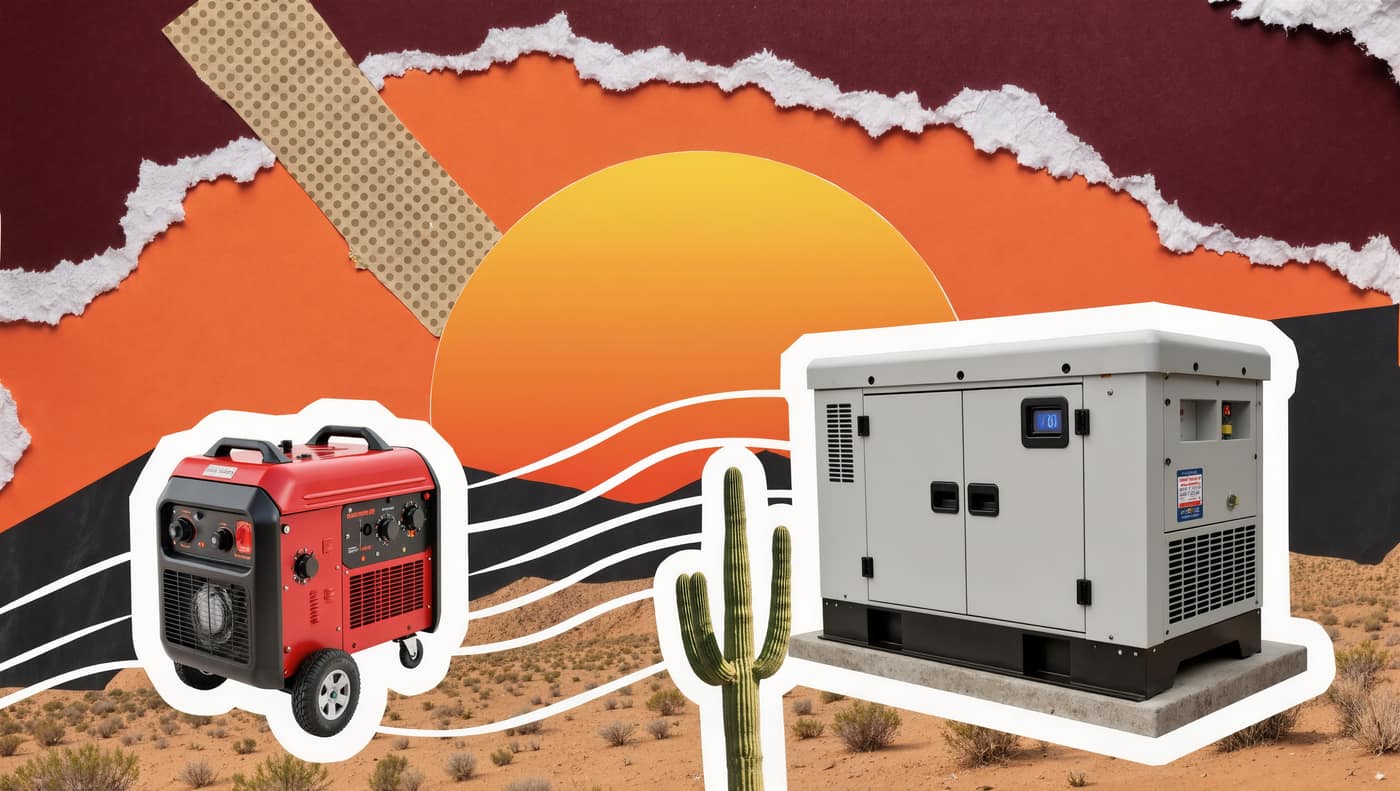
Here's the answer for most Phoenix-area homes. If you need to run central air conditioning during an outage, you need a standby generator or a very large portable paired with a soft-start kit. If you only need the fridge, lights, fans, internet, and phone charging, a portable generator connected safely through an inlet and interlock is a far cheaper solution that works.
Arizona adds two factors most generator guides ignore: extreme heat, which cuts a generator's output, and the danger of storing and refueling gasoline in a 115-degree garage. Here's how the two options really compare.
The Quick Comparison
Portable generator: typically 5 to 12 kW. Runs on gasoline, or on propane for dual-fuel models. You start it, roll it out, and plug it in by hand. Total cost with a professionally installed inlet and interlock usually runs $2,000 to $5,000, including the generator.
Standby generator: typically 14 to 26 kW for homes, larger for big ones. Runs on natural gas or propane. It starts automatically within seconds of an outage through an automatic transfer switch. Installed cost usually runs $9,000 to $18,000. See what a whole-home generator costs in Phoenix.
The AC Question
Central air is what separates the two. A 3- to 5-ton AC compressor draws a large surge of current for a split second at startup, often several times its running load. Most portable generators can't absorb that surge, so the AC stalls or the generator trips.
A soft-start kit on the outdoor unit cuts that surge a lot. With one, a large 9 to 12 kW portable can sometimes run a 3-ton system. That's a load to verify, not assume. A standby generator sized for your AC handles it with room to spare, along with the rest of the home.
Why Arizona Heat Matters
Heat derating. Engines make less power in hot air, and generator ratings assume mild conditions. On a 115-degree afternoon, a generator delivers noticeably less than its nameplate rating. Standby units are built for continuous outdoor duty and sized with that in mind. Portables are often run right at their limit.
Fuel safety. A portable on gasoline burns roughly 0.5 to 1 gallon an hour, so a long outage means storing 10 to 20 gallons. Gasoline in a hot garage vents vapor, and fuel left over the summer goes stale. Standby generators on natural gas or propane avoid both problems.
Carbon monoxide. Portable generators must run outdoors, at least 20 feet from doors, windows, and vents. Never run one in the garage, even with the door open. In the heat, people are tempted to cut corners. Standby units are permanently placed at code-required clearances.
Monsoon timing. Valley outages often come with dust storms and heavy rain, exactly when you don't want to be outside wrangling cords and refueling an engine.
Connecting a Portable Safely
Never plug a generator into a wall outlet with a double-ended cord, sometimes called backfeeding. It can energize the utility lines and seriously injure line workers, and it bypasses your breakers. The safe way is a generator inlet box on the outside wall and a code-compliant interlock or manual transfer switch at your panel.
With that setup, you plug in one cord and choose which circuits to run from your panel. An inlet and interlock typically costs $1,000 to $2,500 installed, permit included.
Which One Is Right for You?
Choose a portable with an inlet and interlock if outages at your address are rare and short, you're comfortable running and refueling it, and keeping the fridge and fans going is enough.
Choose standby if anyone in your home depends on medical equipment or AC for health reasons, you travel and want the home protected while you're gone, you work from home, or you simply want the power to come back without lifting a finger.
Running a business? Commercial sites have different needs, from refrigeration to data rooms. See our commercial backup generator service.
Installation Across the Valley
We install standby generators, transfer switches, and portable generator inlets with interlocks throughout metro Phoenix. That includes Tempe, Mesa, and Scottsdale. Start with a generator installation estimate and we'll size the right option for your home and budget.
Frequently Asked Questions
Can a portable generator run a pool pump?
Often, yes, if it's large enough and the pump circuit is one you select through the interlock. Variable-speed pumps are easier on a generator than older single-speed pumps.
How loud are they?
Standby generators run about as loud as a central AC condenser. Open-frame portables are much louder. Inverter portables are the quietest but usually the smallest. Some HOAs set rules on generator placement, so check before you buy.
What size portable generator do I need?
Add up the running watts of what you want to power, then add the biggest starting surge. For a fridge, freezer, lights, fans, internet, and a few outlets, a 5,000 to 7,500-watt unit usually works. To try a 3-ton AC with a soft-start kit, look at 9,000 watts or more and confirm it with a load calculation first.
Can I start with a portable and upgrade to standby later?
Yes. An inlet and interlock aren't wasted money. They keep working as a backup method, and the panel review we do for the interlock helps plan a future standby install.
Do standby generators handle the summer heat?
Yes. They're designed for outdoor installation with cooling built into the enclosure. Proper clearance from walls and regular maintenance keep them reliable through Phoenix summers.
The Takeaway
Want the AC on during an outage? Go standby. Want the fridge and fans for a few hours? A portable with an inlet and interlock does it for a fraction of the cost. Never backfeed, and never run one in the garage.
Need a hand with this?
Generator Installation
Keep Reading
How Much Does a Whole-Home Generator Cost in Phoenix?
Most Valley homeowners spend $9,000 to $18,000 for an installed standby generator. Here's what moves the number, and how to get AC-level backup without overbuying.
Read more
Breaker Keeps Tripping and Won't Reset? What It Means and What to Do Tonight
A breaker that trips the instant you reset it is telling you something specific. Here's how to read it, what you can safely try, and when to stop and call.
Read more
Electrical Panel Upgrade Cost in Phoenix: 100A vs. 200A (2026)
A same-size panel swap runs about $2,000–$4,000. Moving from 100 to 200 amps is usually $3,500–$6,500. Here's what you're paying for and how to tell which you need.
Read moreReady When You Are
Free estimates, upfront pricing, and licensed electricians who show up on time. Let's get it handled.