

What Does a Tenant Improvement Electrician Do? A TI Guide for Phoenix Businesses
A TI electrician turns an empty suite into a space that's powered, lit, inspected, and ready to open. Here's the scope, the timeline, and how to keep the electrical side off your critical path.
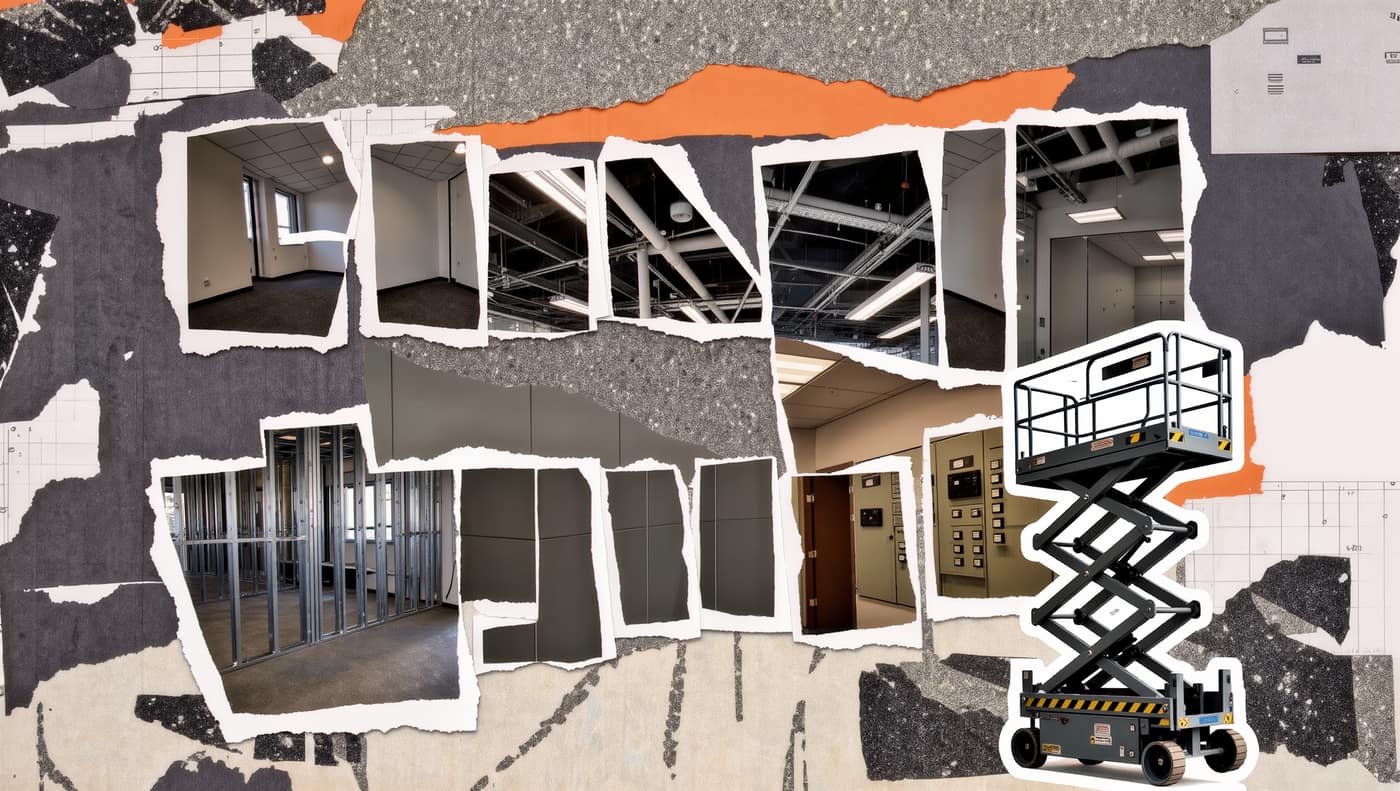
A tenant improvement (TI) electrician designs, permits, and installs the electrical work that turns a leased commercial space into a working business. That covers power distribution and panels, lighting and controls, dedicated equipment circuits, emergency and exit lighting, and the low-voltage rough-in for data, security, and AV. It's all coordinated with your general contractor, landlord, and city inspectors so the space passes final and opens on schedule.
In a build-out, electrical sits squarely on the critical path. Here's what a TI electrician handles, what drives cost and timeline in the Phoenix market, and what to ask before you sign.
What's in a Typical TI Electrical Scope
Demolition and make-safe: removing the previous tenant's circuits, fixtures, and abandoned cabling, and making the remaining system safe.
Power distribution: sizing and installing panels, transformers where 480-volt building power needs to step down, and feeders from the building's main distribution. See our switchgear and power distribution work.
Branch circuits and devices: general receptacles, floor boxes for open offices, and dedicated circuits for kitchens, servers, medical and dental equipment, signage, and specialty gear.
Lighting and controls: LED fixtures, occupancy sensors, daylight controls, and time scheduling, as the commercial energy code requires. It's often paired with a lighting upgrade in areas outside the TI.
Life safety: emergency egress lighting and exit signs, plus power and coordination for the fire alarm contractor.
Low-voltage rough-in: boxes, pathways, and sleeves for data, access control, cameras, and AV. Some teams also pull and certify the cable through structured cabling.
How a TI Project Flows
1. Design and pricing. The electrician works from the architect's and engineer's drawings, or helps engineer the scope in a design-build arrangement. Early involvement catches problems like an undersized service or long-lead gear before they cost time.
2. Permitting. Phoenix, Tempe, Scottsdale, and other Valley cities review commercial TI plans before work starts. Plan review can take several weeks, so submit early.
3. Rough-in. Conduit, boxes, and wire go in before walls close and ceilings drop, followed by a rough-in inspection.
4. Trim and equipment. Devices, fixtures, panels, and equipment connections are completed, and circuits are labeled.
5. Testing and final. Systems are tested, final inspection passes, and the certificate of occupancy can be issued.
Timeline and Cost Drivers
A small office suite might need two to four weeks of electrical field work. A restaurant or medical buildout often takes six weeks or more. Permit review, utility coordination, and equipment lead times usually set the overall schedule more than the field work does.
Cost depends heavily on use. A straightforward office refresh is far less electrically intense per square foot than a restaurant with cooking lines, hoods, and walk-in coolers, or a dental suite with dedicated equipment circuits. The biggest swing factors are:
Existing capacity: whether the building's service and the suite's panel can carry the new load, or whether new gear and feeders are needed.
Reuse vs. new: how much existing conduit, lighting, and distribution can be reused safely.
Gear lead times: transformers, switchboards, and some panelboards can take weeks or months to arrive. Ordering early protects your date.
Who pays: many leases include a tenant improvement allowance from the landlord. A clear, itemized electrical bid helps you see what the allowance covers.
Common TI Electrical Mistakes
Bringing the electrician in late. When pricing starts after the design is final, capacity problems surface during construction, when they're most expensive to fix.
Assuming the existing panel is enough. A previous office tenant's panel may be far too small for a restaurant, a fitness studio, or a lab. A load review at the start prevents a mid-project surprise.
Forgetting equipment specs. Kitchen equipment, imaging machines, and specialty tools each have exact voltage and amperage requirements. Provide cut sheets early so the circuits match on day one.
Treating low voltage as an afterthought. Data, cameras, and access control need boxes and pathways at rough-in. Adding them after the walls close means cutting drywall.
Skipping the as-builts. Accurate panel schedules and drawings make every future change faster and cheaper.
Questions to Ask a TI Electrician
Are you licensed, bonded, and insured for commercial work in Arizona? Verify with the Arizona Registrar of Contractors.
Can you review the drawings now and flag capacity or code issues before we price?
What are the lead times on the gear this job needs, and when do you need a commitment to hold our date?
Who handles the low-voltage scope, and how is it coordinated with the electrical rough-in?
Can you work after hours if the building has occupied neighbors?
TI Electrical Across the Valley
We deliver tenant improvement and build-out electrical for offices, retail, restaurants, and medical suites, including tenant improvement electrical in Phoenix, Tempe, and Scottsdale. For the rest of your building's needs, see our full commercial electrical services.
Frequently Asked Questions
Who hires the TI electrician, the tenant or the landlord?
Either. Often the tenant's general contractor hires the electrician as a subcontractor. Some landlords run the TI themselves and deliver a finished space. Your lease spells out who controls the work.
Do we need an electrical engineer for a TI?
Most commercial TIs with meaningful electrical changes need stamped drawings for permit. A design-build electrician can coordinate with an engineer or work from your design team's plans.
Can we stay open during electrical work?
Often, yes. Phased work, temporary power, and after-hours shutdowns let many businesses keep operating during a remodel or expansion.
The Takeaway
A TI electrician owns everything from panels to exit signs, and their schedule is your schedule. Bring them in during design, order long-lead gear early, and get an itemized bid you can measure against your TI allowance.
Need a hand with this?
Tenant Improvements & Build-Outs
Keep Reading

How Much Does a Whole-Home Generator Cost in Phoenix?
Most Valley homeowners spend $9,000 to $18,000 for an installed standby generator. Here's what moves the number, and how to get AC-level backup without overbuying.
Read more
Breaker Keeps Tripping and Won't Reset? What It Means and What to Do Tonight
A breaker that trips the instant you reset it is telling you something specific. Here's how to read it, what you can safely try, and when to stop and call.
Read more
Electrical Panel Upgrade Cost in Phoenix: 100A vs. 200A (2026)
A same-size panel swap runs about $2,000–$4,000. Moving from 100 to 200 amps is usually $3,500–$6,500. Here's what you're paying for and how to tell which you need.
Read moreReady When You Are
Free estimates, upfront pricing, and licensed electricians who show up on time. Let's get it handled.