
Do You Need a 240V Outlet? Dryers, Ranges, Shops, and EVs
Dryers, ranges, welders, and EV chargers all need 240 volts, but not the same outlet. Here's which one each needs, what it costs, and when hardwiring is the better call.
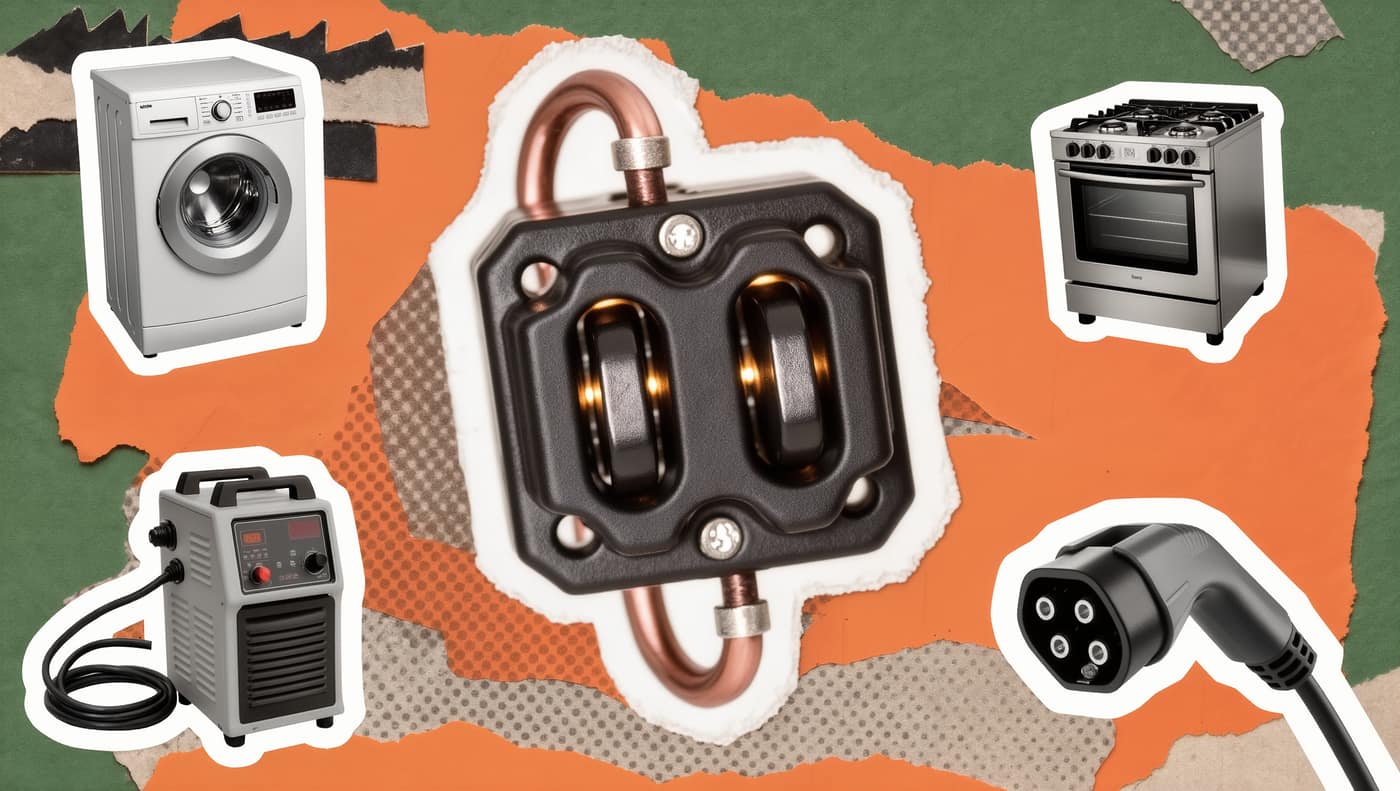
You need a 240-volt outlet for any appliance or tool that draws more power than a standard outlet can deliver. That includes electric dryers and ranges, welders, larger air compressors and table saws, some window and mini-split AC units, and EV chargers. A licensed electrician installs a dedicated circuit with a double-pole breaker, wire sized to the load, and the correct receptacle for the plug.
In the Phoenix area, a 240V outlet near the panel typically costs $300 to $800. Longer runs to a detached garage or shop can run $800 to $1,500 or more. The right answer for an EV can be no outlet at all. Here's how to tell what you need.
Match the Outlet to the Plug
240-volt outlets come in different shapes so the wrong plug can't go into the wrong circuit. The most common ones:
NEMA 14-30 (30 amps, four prongs): the standard for electric dryers in modern homes.
NEMA 10-30 (30 amps, three prongs): the older dryer outlet without a separate ground. It's common in pre-1996 homes. New installs use 14-30 instead.
NEMA 14-50 (50 amps, four prongs): electric ranges, RV hookups, and portable EV chargers.
NEMA 6-50 (50 amps, three prongs): welders and some EV chargers.
NEMA 6-20 or 6-30 (20 or 30 amps): shop compressors, table saws, kilns, and other tools.
Look at the plug on the cord, or the manual for the tool or appliance. It will name the receptacle type. Never swap the plug to fit the outlet you already have.
What It Costs
Outlet near the panel, like a dryer in a laundry room next to the garage: about $300 to $800.
Longer run through the attic or across the house: about $600 to $1,200.
Detached garage, shop, or RV pad with trenching: about $1,000 to $2,500.
Panel upgrade needed: if your panel is out of space or your service is near its limit, see our panel upgrade cost guide. A load calculation tells you whether there's room.
Wire size and distance drive most of the cost. A 50-amp circuit needs heavier copper than a 30-amp one, and every foot adds up. You get a written, flat-rate price before work starts.
The EV Question: Outlet or Hardwired Charger?
A NEMA 14-50 outlet lets you plug in the portable charger that comes with many EVs, usually charging at up to 32 amps. It's flexible, and you can take the charger with you. But EV charging is one of the hardest jobs an outlet can do: hours of continuous high current, night after night. Standard-grade receptacles can overheat and melt under that load.
If you go with an outlet, use an industrial-grade receptacle on a correctly sized circuit. Under the code editions most Valley cities now use, a 240V garage outlet also needs GFCI protection, which some EV chargers don't get along with.
For most drivers, a hardwired Level 2 charger is the better choice. It charges faster, has no plug to wear out, and avoids GFCI nuisance trips. The install cost is usually about the same. See how fast a Level 2 charger charges and our guide to Tesla Wall Connector installation cost.
Signs an Existing 240V Outlet Needs Attention
Scorch marks, discoloration, or melted plastic around the slots.
A plug that's loose and falls out easily, or one you have to force in.
A plug or cord that's hot to the touch after use. Warm is normal for heavy loads, but hot is not.
A dryer that runs but takes forever to heat, or a range burner that won't get hot, can point to a loose connection at the outlet.
Any of these means the outlet should be replaced and the wiring checked. Loose connections on 240-volt circuits carry enough current to start a fire, and it's an inexpensive fix when caught early.
Safety Notes
Never use an adapter to plug a 240V appliance into a mismatched outlet. You can overload the wire or defeat the ground.
Converting an old three-prong dryer outlet to four-prong requires running a separate ground. Changing the receptacle alone isn't enough.
Garages and outdoor locations need GFCI protection and, outdoors, weather-resistant receptacles with in-use covers. Monsoon rain finds every gap.
240V circuits carry a lot of energy. This is permitted work for a licensed electrician, not a weekend DIY project.
240V Outlet Installation Near You
We install 240V outlets and dedicated circuits across the Valley through our outlet and switch service, including 240V outlet installation in Phoenix, Chandler, and Glendale. Charging an EV? Our EV charger installation team can help you choose between an outlet and a hardwired charger.
Frequently Asked Questions
Can I plug my EV into my dryer outlet?
Only with the right adapter for your car's charger, and only at a reduced charging rate that matches the 30-amp circuit. It also means swapping cords with the dryer. A dedicated EV circuit is safer and more convenient.
How long does it take to install a 240V outlet?
Most installs take two to four hours. Long runs, trenching, or panel work can extend it to a full day. A permit and inspection are required.
Does a 240V outlet cost more to run?
No. You pay for the energy the appliance uses, not the voltage. Many 240V appliances actually run more efficiently because they draw less current for the same power.
The Takeaway
Match the outlet to the plug, size the circuit to the load, and let a licensed electrician handle the permit. For an EV, a hardwired Level 2 charger is usually the better buy than an outlet.
Need a hand with this?
Outlet & Switch Installation
Keep Reading
How Much Does a Whole-Home Generator Cost in Phoenix?
Most Valley homeowners spend $9,000 to $18,000 for an installed standby generator. Here's what moves the number, and how to get AC-level backup without overbuying.
Read more
Breaker Keeps Tripping and Won't Reset? What It Means and What to Do Tonight
A breaker that trips the instant you reset it is telling you something specific. Here's how to read it, what you can safely try, and when to stop and call.
Read more
Electrical Panel Upgrade Cost in Phoenix: 100A vs. 200A (2026)
A same-size panel swap runs about $2,000–$4,000. Moving from 100 to 200 amps is usually $3,500–$6,500. Here's what you're paying for and how to tell which you need.
Read moreReady When You Are
Free estimates, upfront pricing, and licensed electricians who show up on time. Let's get it handled.