
Is Whole-Home Surge Protection Worth It in Arizona?
For most Valley homes, yes. A panel-mounted protector typically costs $300–$800 installed and guards the AC, appliances, and electronics a power strip can't reach.
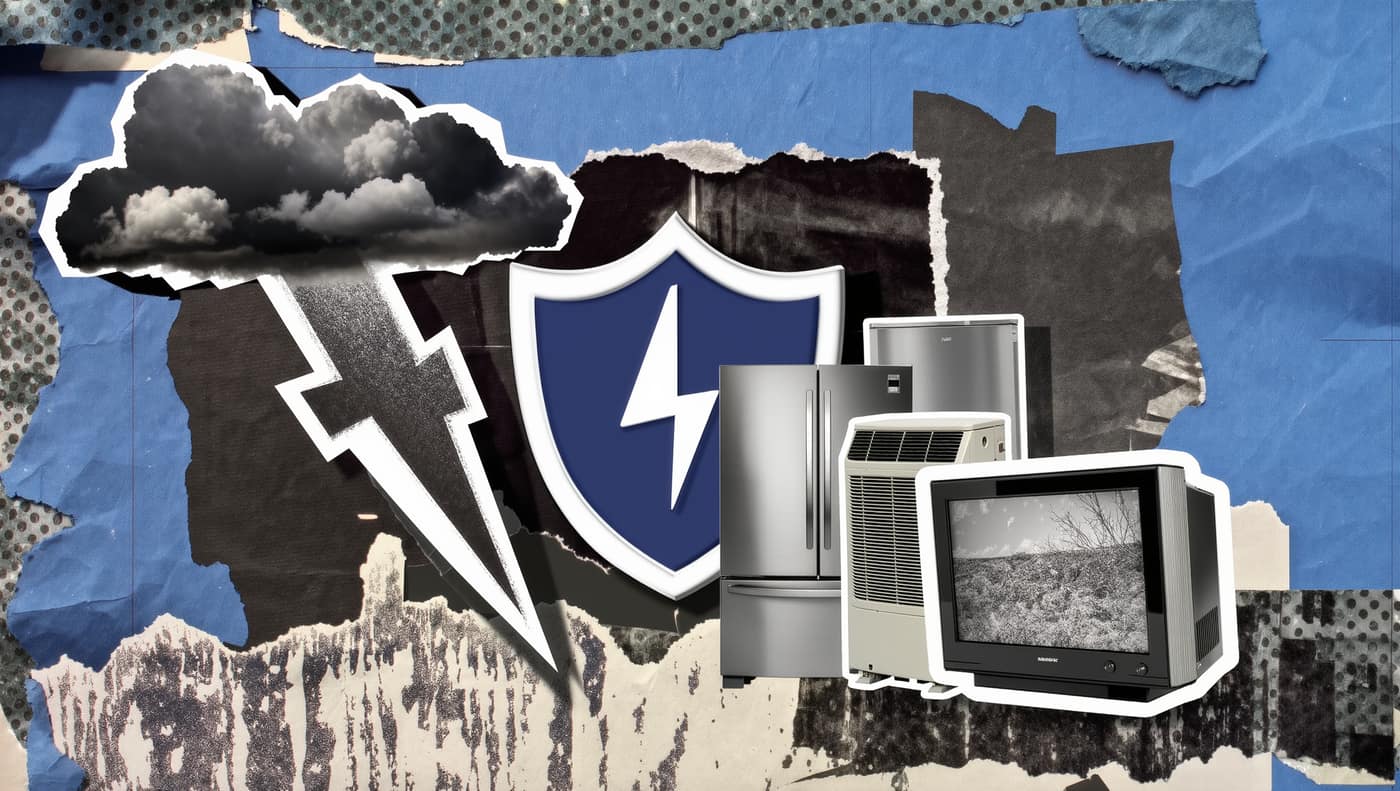
Yes, for most Arizona homes, whole-home surge protection is worth it. A quality surge protector mounted at your electrical panel usually costs $300 to $800 installed. It protects the hard-wired, high-dollar equipment that power strips can't: the AC and its controls, the pool equipment, the refrigerator, the washer and dryer, and every smart device on your network.
Monsoon season makes the case on its own. Lightning strikes and the grid switching that follows send voltage spikes into Valley homes every summer. One fried AC control board can cost more than the protector. Here's how it works and what to look for.
Where Surges Come From
Outside the home: lightning strikes on or near power lines, utility switching, and equipment faults on the grid. These are the big, damaging events, and monsoon storms make them a regular part of a Phoenix summer. We cover the storm side in why monsoon season fries electronics.
Inside the home: a large share of surges actually start indoors. AC compressors, pool pumps, and other motors cycle on and off and send small spikes down the wiring. Those are too small to destroy anything overnight, but over years they wear down the electronics in appliances, thermostats, and chargers.
How Whole-Home Protection Works
A whole-home surge protector, called a Type 1 or Type 2 SPD, installs at or next to your main panel. When voltage spikes, it diverts the excess energy to ground in a fraction of a microsecond, before the surge spreads through your circuits.
It works best as a team. The panel unit takes the big hits. Point-of-use surge strips, called Type 3 devices, handle what's left right at sensitive electronics like computers, TVs, and networking gear. Panel protection without good strips leaves some exposure at the outlet. Good strips without panel protection leave everything that's hard-wired exposed.
What It Costs and What to Look For
Installed cost: $300 to $800 for most homes, depending on the unit and whether your panel has room for a breaker-style protector. It's often less when installed alongside a panel upgrade. Recent editions of the National Electrical Code require surge protection whenever a home's service equipment is replaced or upgraded.
Surge current rating: higher is better. Look for at least 40 kA, and more for homes in exposed or rural areas. This rating tells you how much energy the unit can handle.
Voltage protection rating, or VPR: lower is better. It's the voltage the unit lets through to your home during a surge. Ratings around 600 to 700 volts are typical for good residential units.
Status indicator: protectors wear out as they absorb surges. Choose one with lights that show it's still protecting, and check it after big storms.
Equipment warranty: many quality units come with a connected-equipment warranty. Read the terms, but it's a sign the manufacturer stands behind the product.
Grounding Matters as Much as the Device
A surge protector sends excess energy to ground, so it only works as well as your grounding system. In older homes, we often find corroded ground rods, loose ground connections, or missing water-pipe bonds. We check the grounding and bonding as part of every install and correct what's needed so the protector can do its job.
The Math: Protector vs. Repair Bills
Compare the protector's price to what a single bad surge can cost. Replacing a fried control board on a modern AC system often runs several hundred to over a thousand dollars, and that's if the part is in stock during a July heat wave. A variable-speed pool pump motor or pool automation board can cost as much. Refrigerators, washers, and induction ranges now rely on electronic control boards that are expensive to replace.
Add up the electronics in a typical Valley home, including smart thermostats, garage door openers, networking gear, TVs, and an EV charger, and the exposure easily reaches five figures. A $300 to $800 protector that blocks even one major event has paid for itself many times over. The smaller everyday surges it absorbs also help appliances last longer.
When It's Especially Worth It
You have a newer high-efficiency AC or heat pump with sensitive electronic controls.
You have pool equipment with variable-speed pumps or automation.
You've invested in smart home devices, a home office, or a home theater.
You charge an EV at home, since charger electronics are expensive to replace.
You live on the edge of town, in the foothills, or anywhere with frequent lightning nearby.
Whole-Home Surge Protection Across the Valley
We install whole-home surge protection across metro Phoenix, including Phoenix, Scottsdale, Gilbert, and Tempe. Most installs take an hour or two and pair easily with other panel work.
Frequently Asked Questions
Will a surge protector stop a direct lightning strike?
No device can guarantee that. A direct strike on your home carries enormous energy. Whole-home protection handles the far more common nearby strikes and grid surges, which cause most of the damage.
How long does a whole-home surge protector last?
Many last years, but each surge wears them down. Replace the unit when its indicator shows it's no longer protecting, or after a major nearby strike.
Does a surge protector help during power outages?
Indirectly. It doesn't keep power on, but outages often end with a surge when power is restored, and the protector helps absorb it. Turning off big appliances during an outage helps too.
Do I still need surge strips?
Yes, for sensitive electronics. The panel unit handles the big events, and point-of-use strips catch the smaller leftover spikes right at the device.
The Takeaway
For $300–$800, a panel-mounted surge protector guards the AC, pool equipment, and appliances that power strips can't. In monsoon country, it's some of the cheapest insurance you can buy.
Need a hand with this?
Whole-Home Surge Protection
Keep Reading
How Much Does a Whole-Home Generator Cost in Phoenix?
Most Valley homeowners spend $9,000 to $18,000 for an installed standby generator. Here's what moves the number, and how to get AC-level backup without overbuying.
Read more
Breaker Keeps Tripping and Won't Reset? What It Means and What to Do Tonight
A breaker that trips the instant you reset it is telling you something specific. Here's how to read it, what you can safely try, and when to stop and call.
Read more
Electrical Panel Upgrade Cost in Phoenix: 100A vs. 200A (2026)
A same-size panel swap runs about $2,000–$4,000. Moving from 100 to 200 amps is usually $3,500–$6,500. Here's what you're paying for and how to tell which you need.
Read moreReady When You Are
Free estimates, upfront pricing, and licensed electricians who show up on time. Let's get it handled.