
Why Monsoon Season Fries Electronics (and How to Stop It)
A power strip protects a lamp. It does nothing for the four-ton AC unit a surge can turn into scrap.
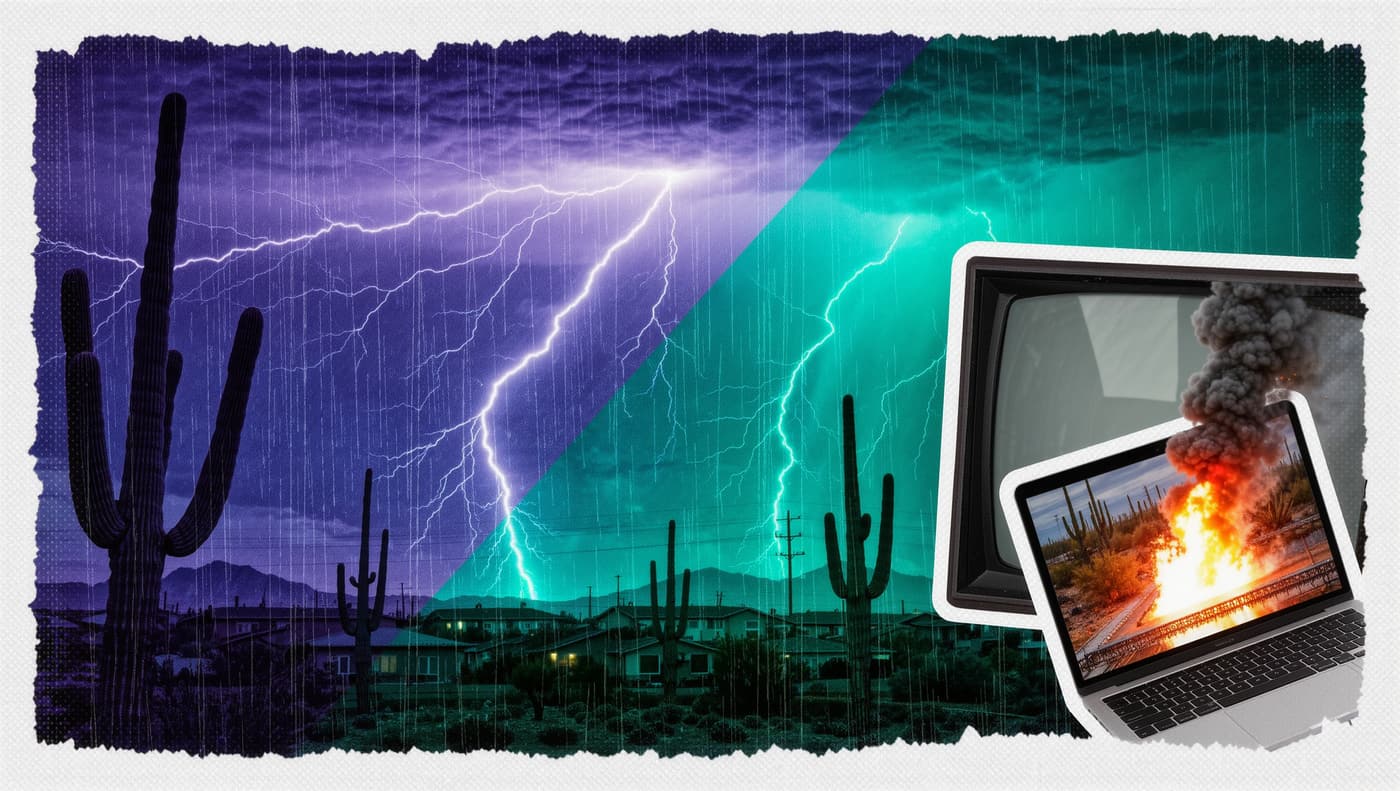
Every Phoenix monsoon delivers the same one-two punch: nearby lightning strikes and the grid switching that follows. Both send voltage spikes racing through your wiring.
Those spikes don't just threaten your TV. They hit hard-wired equipment — HVAC, appliances, the pool pump — that no power strip can protect.
Protection Lives at the Panel
A whole-home surge protector installs at the electrical panel, where power enters the house, and clamps spikes before they reach a single outlet.
Pair it with point-of-use protectors for sensitive electronics and you've got two layers covering everything from a lightning strike to the small daily surges that quietly age your gear.
Frequently Asked Questions
How much does whole-home surge protection cost?
Most Phoenix-area homes pay $300 to $800 installed, depending on the unit and whether the panel has room for a breaker-style protector. It's often less when done alongside a panel upgrade.
Can a surge damage my AC even when it isn't running?
Yes. Hard-wired equipment stays connected to power when it's idle, so a surge can still reach its control board and electronics. That's why protection at the panel matters for HVAC and pool equipment.
Should I unplug electronics during a monsoon storm?
Unplugging is the surest protection for the devices you unplug, but it can't help hard-wired equipment like your AC, water heater, or pool pump. A whole-home surge protector covers those.
The Takeaway
Whole-home surge protection costs a fraction of the appliances it protects — and monsoon season is exactly why it exists.
Need a hand with this?
Whole-Home Surge Protection
Keep Reading
Breaker Keeps Tripping and Won't Reset? What It Means and What to Do Tonight
A breaker that trips the instant you reset it is telling you something specific. Here's how to read it, what you can safely try, and when to stop and call.
Read more
Half Your House Lost Power? The "Lost Leg" Problem Explained
When some rooms go dark, the AC blows warm air, and the dryer won't heat, you've probably lost one of the two legs of power feeding your home. Here's what to do.
Read more
Aluminum Wiring and Knob-and-Tube in Older Valley Homes: Repair or Rewire?
Aluminum wiring can often be made safe with approved connectors. Knob-and-tube almost always needs replacing. Here's how to tell which you have and what each fix costs.
Read moreReady When You Are
Free estimates, upfront pricing, and licensed electricians who show up on time. Let's get it handled.